Fire Alarm System & Fire Hydrant System: Essential Fire Safety Solutions
Fire safety is one of the most important aspects of any residential, commercial, or industrial building. A reliable fire protection system not only protects property and assets but also saves lives during emergencies. Among the most effective fire safety solutions are the Fire Alarm System and the Fire Hydrant System. Both systems work together to detect, alert, and control fire hazards efficiently.
What is a Fire Alarm System?
A Fire Alarm System is an electronic safety system designed to detect smoke, heat, or fire and immediately alert people within the building. The system provides early warning signs, allowing occupants to evacuate safely and helping emergency responders take quick action.
Components of a Fire Alarm System
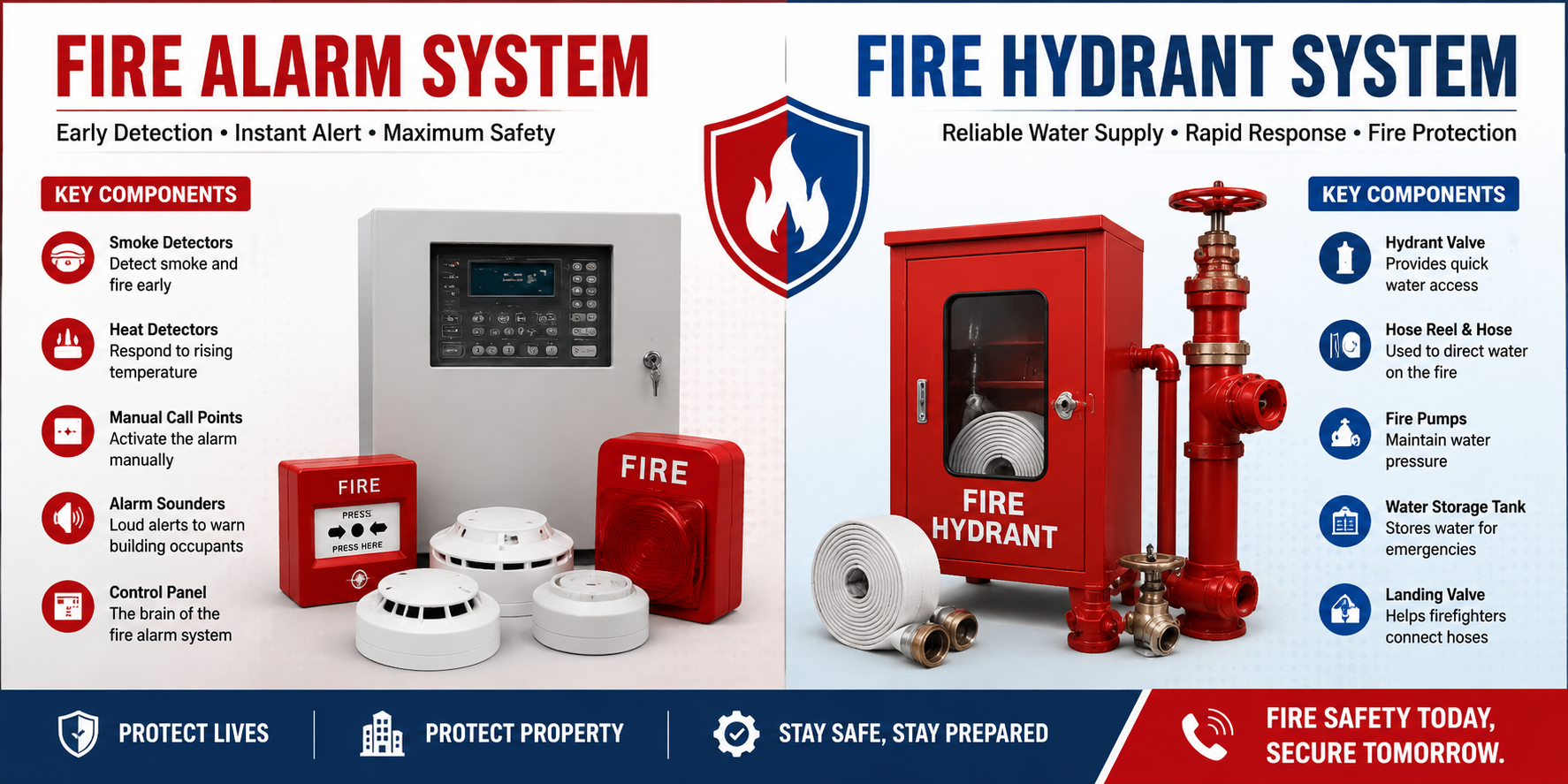
- Fire Alarm Control Panel (FACP)
The control panel acts as the brain of the system. It receives signals from detectors and activates alarms during emergencies.
- Smoke Detectors
Smoke detectors identify smoke particles in the air and trigger alarms before the fire spreads.
- Heat Detectors
Heat detectors activate when temperature levels rise beyond a safe limit.
- Manual Call Points
These are emergency switches that allow people to manually activate the fire alarm system.
- Alarm Sounders & Hooters
These devices produce loud warning sounds to alert building occupants.
- Emergency Communication Systems
Some advanced systems include voice evacuation and emergency communication features.
Types of Fire Alarm Systems
Conventional Fire Alarm System
Ideal for small buildings, this system divides the premises into zones for fire detection.
Addressable Fire Alarm System
Suitable for large facilities, it identifies the exact location of the fire source.
Wireless Fire Alarm System
Uses wireless technology for easy installation and flexibility.
Hybrid Fire Alarm System
Combines features of both conventional and addressable systems.
Benefits of Fire Alarm Systems
- Early fire detection
- Quick emergency response
- Protection of life and property
- Reduced fire damage
- Compliance with fire safety regulations
- Increased workplace safety
Applications of Fire Alarm Systems
Fire alarm systems are widely used in:
- Commercial buildings
- Factories & warehouses
- Shopping malls
- Hospitals
- Hotels
- Educational institutions
- Residential complexes
What is a Fire Hydrant System?
A Fire Hydrant System is an active fire protection system designed to provide a continuous water supply during firefighting operations. It enables firefighters and trained personnel to control and extinguish fires effectively.
The system includes pipelines, hydrant valves, hoses, pumps, and water storage tanks connected throughout the building or facility.
Components of a Fire Hydrant System
- Fire Hydrant Pumps
These pumps maintain high water pressure throughout the system.
- Hydrant Valves
Installed at strategic locations for quick water access during emergencies.
- Hose Reel & Hoses
Used to direct water onto the fire source.
- Water Storage Tank
Stores sufficient water supply for firefighting operations.
- Landing Valves
Allow firefighters to connect hoses easily.
- Sprinkler Integration
Many hydrant systems are connected with automatic sprinkler systems for enhanced safety.
Types of Fire Hydrant Systems
Wet Riser System
Pipes remain filled with water at all times for immediate response.
Dry Riser System
Pipes remain empty and are filled by firefighters during emergencies.
External Fire Hydrant System
Installed outside buildings for use by fire brigade teams.
Internal Fire Hydrant System
Installed inside buildings for rapid fire control.
Advantages of Fire Hydrant Systems
- Continuous water supply during emergencies
- Fast firefighting response
- Protection for large buildings and industrial areas
- Helps minimize fire spread
- Supports firefighters effectively
- Enhances overall fire safety infrastructure
Importance of Fire Alarm & Fire Hydrant Systems Together
A fire alarm system provides early warning, while a fire hydrant system helps control and extinguish the fire. Together, they create a complete fire protection solution that improves emergency preparedness and reduces risk.
Modern buildings, industries, and commercial spaces should always invest in high-quality fire safety systems to ensure maximum protection and regulatory compliance.
Conclusion
Fire accidents can occur unexpectedly, making proper fire safety systems essential for every property. Installing a reliable Fire Alarm System and Fire Hydrant System ensures quick fire detection, rapid response, and effective fire control.
Whether for residential, commercial, or industrial use, investing in advanced fire protection solutions is a smart step toward safeguarding lives, assets, and business operations.